|
|
| Brand Name: | CHG |
| Model Number: | AC-11 |
| MOQ: | 1 set |
| Price: | 100,000-300,000 USD |
| Payment Terms: | T/T,D/P,D/A,L/C |
| Supply Ability: | 10 sets per year |
Heavy-Duty Protective Coating System for High-Temperature Metal Forming
CHG provides customized glass lubricant coating production lines for titanium alloys and other high-performance metal components requiring protective surface treatment before hot forging.
Unlike conventional decorative painting or powder coating, glass lubricant application is a specialized industrial process intended to support subsequent high-temperature forming operations.
The coating forms a protective and lubricating layer on the workpiece surface, helping reduce oxidation during heating and friction during forging.
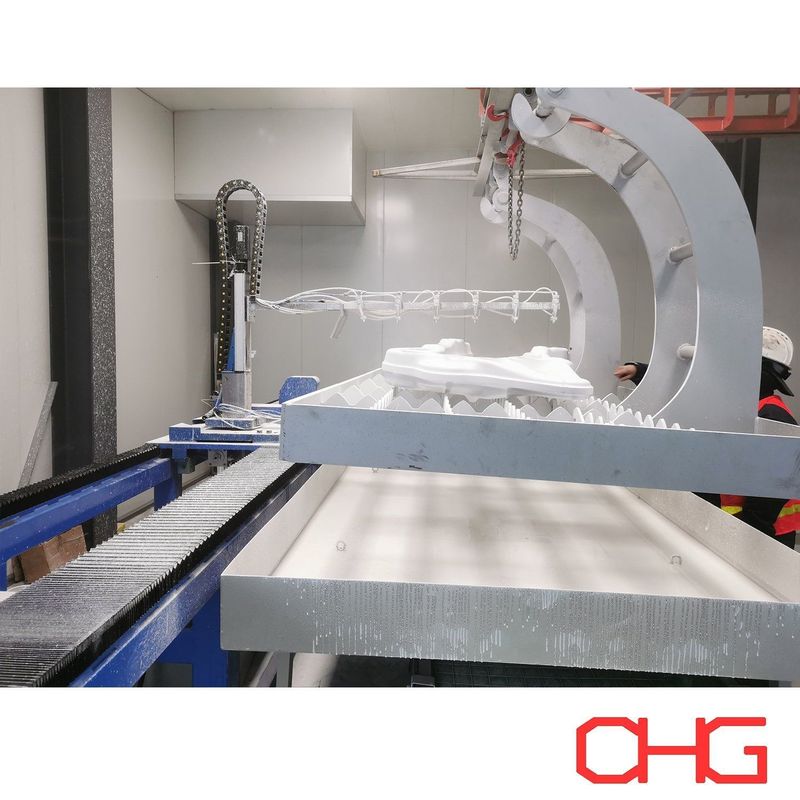
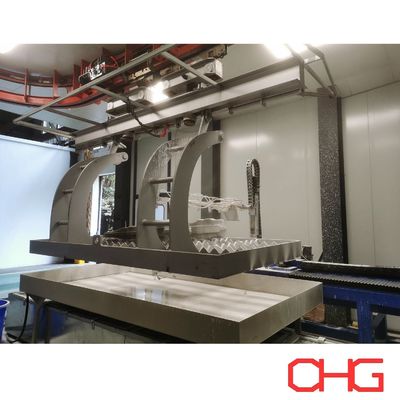
This production line combines automatic liquid spraying, manual supplementary application, and a heavy-duty accumulation conveyor to handle large metal components with different shapes and coating requirements.
The conveyor system is designed to accommodate individual workpieces weighing up to 2 tons, with equipment configuration customized according to the product dimensions, process requirements, and available workshop space.
Specialized Applications in Metal Forging
The spraying system can be engineered for different categories of high-performance metal products.
Titanium and Titanium Alloy ComponentsTitanium alloys are widely used in applications requiring high strength, relatively low density, and resistance to demanding operating conditions.
During high-temperature forging, titanium surfaces are susceptible to oxidation and interactions with the surrounding environment.
Applying a suitable glass-based protective lubricant before heating can help reduce surface oxidation and improve forming conditions.
High-Temperature SuperalloysSelected nickel-based and other high-temperature alloys may require specialized protective or lubricating coatings during hot-working operations.
The coating formulation and application process must be compatible with the alloy, heating temperature, and forming requirements.
High-Strength Engineering SteelsCertain steel forging processes may also benefit from specialized lubricating coatings.
For these applications, the coating material and processing conditions are selected according to the steel grade and forging procedure.
Main Production Line Configuration
The system integrates coating application equipment with controlled workpiece transportation.
| Equipment | Main Function |
|---|---|
| Automatic Spraying Units | Apply glass lubricant to designated workpiece surfaces |
| Manual Spray Stations | Provide supplementary coating for complex geometries |
| Heavy-Duty Accumulation Conveyor | Transport and position large metal components |
| Customized Carriers | Support workpieces according to their weight and geometry |
| Coating Supply System | Deliver coating material to the spraying equipment |
| Spray Application Area | Provide a designated working environment for coating |
| Control System | Coordinate conveyor movement and automatic spraying |
| Loading and Unloading Stations | Facilitate handling of heavy workpieces |
Additional equipment can be incorporated according to the coating material, required preparation process, and project-specific operating conditions.
Automatic Glass Lubricant Application
The automatic spraying section is designed to apply the selected glass-based coating material to the required workpiece surfaces.
Spray equipment is configured according to the coating formulation, product geometry, application requirements, and desired production capacity.
Depending on the project, the automatic system can incorporate controlled spray gun positioning and coordinated workpiece movement.
Benefits of Automatic ApplicationAutomatic spraying can provide:
Repeatable application sequences
Controlled spray gun movement
Reduced dependence on manual spraying for regular workpieces
Consistent operating conditions
Integration with conveyor positioning
Improved production flow for repeated component designs
The actual coating thickness and coverage depend on the material properties, spray parameters, workpiece geometry, and process settings.
Forging blanks and preforms may contain curved surfaces, recesses, irregular contours, or other geometries that are difficult to cover using a fixed automatic spraying arrangement.
Manual spray stations provide additional flexibility for these applications.
Operators can adjust the spray gun angle, distance, and working position to reach areas requiring supplementary coating.
The combined automatic and manual arrangement is particularly suitable for production involving different component designs or workpieces with complicated surface geometries.
Manual spraying can also be used when product changes require additional application flexibility.
Heavy-Duty Accumulation Conveyor
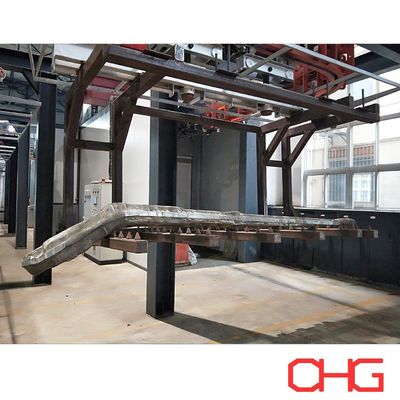
The production line incorporates a heavy-duty accumulation conveyor for transporting metal components between processing stations.
The system is designed for workpieces weighing up to 2,000 kg each.
Its mechanical structure, carriers, and drive arrangement are developed according to the actual workpiece load, dimensions, center of gravity, and required movement sequence.
Controlled Workpiece TransportationThe conveyor supports controlled movement and positioning of heavy components during the coating process.
Depending on the final system design, carriers can be stopped or accumulated at designated locations to coordinate spraying and handling operations.
Customized Workpiece SupportsDifferent forging components require different support and suspension arrangements.
Carrier design takes into account:
Maximum workpiece weight
Overall dimensions
Center of gravity
Workpiece orientation
Required spraying access
Loading and unloading method
Carrier spacing
Conveyor operating conditions
Suitable fixtures help maintain stable positioning throughout transportation and coating.
Integration with Spraying EquipmentThe conveyor control system can be coordinated with automatic spraying equipment so that workpieces are positioned appropriately during application.
This allows the material handling and spraying operations to function as an integrated production process.
Why Glass Lubricant Coating Is Important in Titanium Forging
Titanium alloys are sensitive to high-temperature surface reactions during heating and deformation.
A suitable glass-based lubricant can provide two important functions: thermal surface protection and lubrication during forming.
1. Protection Against High-Temperature OxidationWhen titanium alloys are exposed to elevated temperatures, oxidation and oxygen diffusion can affect the surface condition of the material.
Certain glass-based protective coatings form a barrier that helps limit interaction between the metal surface and the surrounding atmosphere.
This can contribute to reducing oxidation-related surface degradation during the heating stage.
The effectiveness of the protective layer depends on the coating composition, application quality, heating temperature, and exposure duration.
2. Reduction of Friction During ForgingDuring hot forming, friction develops between the workpiece and the forming tools.
A suitable glass lubricant can reduce interfacial friction under the intended forging conditions.
Improved lubrication may help reduce tool wear and support more controlled material flow during deformation.
3. Support for Forming QualityLubrication conditions influence the interaction between the forging dies and the metal workpiece.
An appropriately selected coating can contribute to more consistent forming conditions, particularly for components with complex shapes or demanding deformation requirements.
The actual performance must be evaluated according to the alloy, forging temperature, die design, and selected lubricant formulation.
Typical Coating Process
A glass lubricant spraying operation can be arranged around the following stages:
Workpiece Loading → Surface Preparation → Glass Lubricant Spraying → Supplementary Manual Application → Coating Drying (If Required) → Inspection → Unloading
The final process sequence depends on the selected coating material and forging requirements.
Workpiece LoadingForging components are placed onto suitable conveyor carriers or fixtures.
For heavy products, mechanical handling equipment may be incorporated according to the workpiece dimensions and weight.
Surface PreparationBefore applying the glass lubricant, the workpiece surface is prepared according to the coating supplier's requirements.
The objective is to provide suitable conditions for coating application and adhesion during subsequent handling and heating.
Glass Lubricant SprayingAutomatic spraying equipment applies the selected protective lubricant to the required surfaces.
Spray gun arrangement, application distance, and coating parameters are selected according to the product geometry and coating material.
Manual Supplementary SprayingOperators apply additional coating to areas that require special attention.
This stage provides flexibility when processing irregular or complex forging components.
Drying or ConditioningWhere required by the selected coating formulation, the coated workpieces undergo drying or another specified conditioning process before subsequent handling.
The necessary conditions depend on the lubricant manufacturer's technical requirements.
Inspection and UnloadingAfter coating, the workpieces can be inspected for coverage, visible defects, and other application-specific requirements.
Finished components are then transferred to the next manufacturing operation, such as heating and forging.
Advantages of the Combined Spraying System
Suitable for Large and Heavy Components
The accumulation conveyor is designed to handle individual workpieces weighing up to 2 tons.
Flexible Coating ApplicationAutomatic spraying supports repeatable operations, while manual stations provide additional control for irregular shapes and difficult-to-access areas.
Controlled Material HandlingThe accumulation conveyor allows workpieces to be transported and positioned according to the production sequence.
Application-Specific EngineeringSpraying equipment, carriers, and conveyor arrangements are developed around the actual forging components and coating material.
Integration with Forging ProductionThe coating system can be configured as an upstream preparation process before heating and hot forming.
Typical Industrial Applications
The system can be considered for protective lubricant application on components used in:
Aerospace titanium alloy forging
High-performance alloy manufacturing
Industrial hot forging
Heavy machinery component production
Specialized metal forming operations
Large forged structural components
High-temperature alloy processing
The suitability of a glass lubricant coating process depends on the alloy, forging method, heating conditions, and required coating properties.
Technical Specifications
| Parameter | Configuration |
|---|---|
| Production Line Type | Glass lubricant spraying line |
| Coating Material | Glass-based protective lubricant |
| Application Method | Automatic and manual spraying |
| Workpiece Materials | Titanium alloys and other compatible forging alloys |
| Conveyor Type | Heavy-duty accumulation conveyor |
| Maximum Workpiece Weight | Up to 2,000 kg |
| Workpiece Dimensions | Customized |
| Spray Gun Arrangement | Designed according to product geometry |
| Workpiece Carriers | Customized heavy-duty fixtures |
| Conveyor Movement | Controlled transportation and positioning |
| Loading and Unloading | Designed according to workpiece handling requirements |
| Control System | Project-specific integration |
| Production Capacity | Customized |
| Factory Layout | Engineered according to available space |
Customized Glass Lubricant Coating Equipment
CHG develops specialized coating systems according to the customer's actual products and manufacturing requirements.
For preliminary engineering, the following information is useful:
Workpiece material and alloy grade
Product drawings or photographs
Maximum workpiece dimensions
Maximum individual weight
Required production capacity
Glass lubricant type and technical data
Required coating thickness or application quantity
Surface preparation requirements
Required spraying coverage
Coating drying requirements
Subsequent heating and forging conditions
Available workshop dimensions
Loading and unloading requirements
Required automation level
Based on these parameters, our engineering team can develop a customized solution covering the automatic spraying equipment, manual application stations, coating supply system, heavy-duty accumulation conveyor, workpiece carriers, control system, and overall production line layout.
Industrial Protective Coating Solutions from CHG
CHG provides customized liquid coating and material handling solutions for specialized industrial manufacturing processes.
This glass lubricant coating line combines automatic and manual spraying with a heavy-duty accumulation conveyor capable of handling workpieces up to 2 tons, providing an integrated approach to protective lubricant application before hot forging.
The equipment is configured according to the actual alloy, product geometry, coating formulation, and production requirements.
Contact CHG with your forging component specifications, glass lubricant requirements, and production capacity to receive a customized technical proposal and equipment quotation.