logo

products details

Created with Pixso. Home Created with Pixso. Products Created with Pixso.
Conveyor System
Created with Pixso.

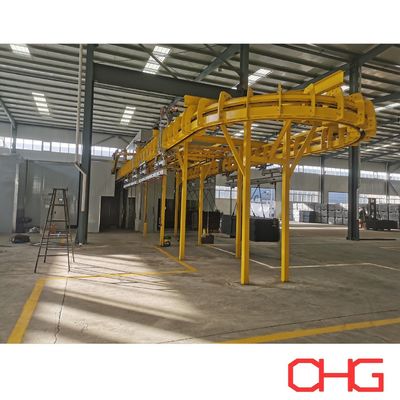
Custom engineered power and free conveyor system providing material flow and flexible transportation in coating production

Custom engineered power and free conveyor system providing material flow and flexible transportation in coating production

Brand Name: CHG
Model Number: CS-03
MOQ: 1 set
Price: 5,000-100,000 USD
Payment Terms: L/C,D/A,D/P,T/T
Supply Ability: 10 sets per year
Detail Information
Place of Origin:
China
Certification:
CE, ISO
Model NO.:
CS-03
Trademark:
CHG
Origin:
China
HS Code:
8428391000
After-sales Service:
Guide Equipment Installation And Use
Warranty:
1 Year
Shipping Cost:
Contact The Supplier About Freight And Estimated Delivery Time.
Packaging Details:
Varies depending on the design
Highlight:

power and free conveyor system

,

flexible material flow conveyor

,

coating production conveyor system

Product Description

Customized Overhead Power and Free Conveyor System for Coating Production Lines


Flexible Material Handling for Automated Surface Finishing

The Power and Free overhead conveyor system is designed to provide efficient and flexible workpiece transportation in industrial coating production lines. By allowing individual carriers to move, stop, accumulate, and transfer independently, the system helps coordinate different coating processes while improving material handling efficiency.

Suitable for powder coating, liquid painting, electrophoretic coating, and pretreatment lines, the conveyor can be integrated with various production equipment to create an organized and reliable material flow.

Each system is custom-engineered according to workpiece dimensions, loading capacity, production requirements, process layout, and available factory space.


Main Features

1. Dual-Track Conveyor Structure

The Power and Free conveyor consists of two separate tracks that perform different functions.

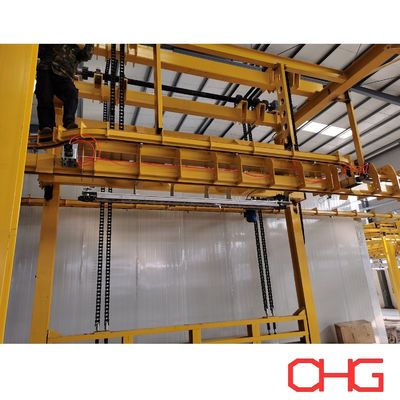
The power track contains the driven chain responsible for transporting carriers, while the free track supports the individual workpiece carriers.

Through mechanical engagement and disengagement, carriers can be stopped or released without interrupting the movement of the main driving chain.

This configuration provides several operational advantages:

  • Independent carrier movement

  • Controlled stopping and releasing

  • Carrier accumulation at designated positions

  • Flexible coordination between production stages

  • Improved material flow management

2. Space-Saving Overhead Design

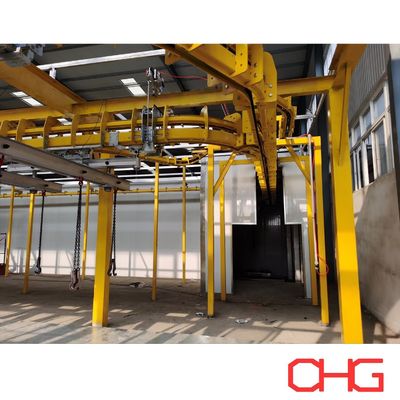
The overhead conveyor arrangement makes effective use of the available vertical space within the workshop.

By suspending workpieces above the production floor, the system reduces interference with ground-level equipment and material handling activities.

The conveyor layout can be coordinated with spray booths, pretreatment equipment, curing ovens, cooling areas, and loading stations to create an efficient production arrangement.

Track routing and installation height are determined according to factory dimensions, workpiece clearance, and equipment requirements.

3. Customized Carriers and Hangers

Different industrial products require different suspension and transportation arrangements.

Our Power and Free conveyor systems can be equipped with customized carriers and hangers designed according to:

  • Maximum workpiece dimensions

  • Individual workpiece weight

  • Number of products per carrier

  • Center of gravity

  • Required hanging orientation

  • Carrier spacing

  • Coating accessibility

  • Loading and unloading requirements

Carrier configurations can be developed for lightweight metal components as well as larger and heavier industrial products.

4. Flexible Conveyor Routing

The conveyor system can incorporate switches, transfer mechanisms, and branch tracks where required by the production process.

This allows carriers to follow different routes according to the workpiece type or processing requirements.

Possible arrangements include:

  • Multiple production routes

  • Alternative coating stations

  • Accumulation and buffer areas

  • Process bypass sections

  • Separate loading and unloading stations

  • Transfer between conveyor sections

The routing arrangement is developed according to the actual coating process and factory layout.

5. Carrier Accumulation and Process Coordination

Different stages of a coating production line often require different processing times.

For example, pretreatment, powder spraying, curing, and cooling may operate under different process conditions.

A Power and Free conveyor allows carriers to accumulate at designated positions before entering the next production stage.

This helps balance material flow between equipment sections and reduces the need to stop the entire conveyor when one process temporarily requires additional time.

6. Integrated Conveyor Control

The conveyor can be connected to the production line's PLC and HMI control system.

Depending on the project configuration, the control system can manage:

  • Conveyor start and stop

  • Carrier position detection

  • Accumulation sequences

  • Carrier release

  • Conveyor speed

  • Track switching

  • Transfer operations

  • Equipment interlocking

  • Fault alarms

  • Operating status monitoring

Sensors and position detection devices can be installed at key locations to coordinate conveyor movement with coating equipment.

7. Safety and Equipment Protection

Safety devices are selected according to the conveyor structure, workpiece weight, operating conditions, and applicable project requirements.

The system can incorporate:

  • Emergency stop devices

  • Overload protection

  • Carrier detection sensors

  • Mechanical guarding

  • Equipment interlocks

  • Anti-collision control where required

  • Fault indication

  • Operator protection at loading and unloading stations

These measures support controlled conveyor operation and help reduce operational risks.


Integration with Coating Production Equipment

The Power and Free conveyor can be incorporated into different types of industrial surface treatment systems.

Typical equipment connections include:


Production Section Conveyor Function
Loading Station Workpiece loading and carrier preparation
Pretreatment System Transportation through cleaning and chemical treatment
Drying Oven Controlled movement through moisture removal
Powder Spray Booth Workpiece positioning and transportation during spraying
Liquid Painting Section Transfer between coating operations
Curing Oven Controlled residence time according to curing requirements
Cooling Section Transportation during cooling
Inspection Station Carrier stopping or positioning for quality checks
Unloading Station Finished workpiece removal


The conveyor configuration is determined by the specific production sequence and processing requirements.


Advantages of Power and Free Conveyor Systems

Improved Production Flexibility

Individual carrier control allows the system to accommodate different products, processing times, and production sequences.

Efficient Material Transportation

Automated workpiece movement reduces repeated manual handling between coating stages and supports a more organized production process.

Better Production Flow Management

Accumulation zones and controlled carrier release help coordinate equipment operating at different processing speeds.

Efficient Factory Space Utilization

Overhead transportation leaves more floor space available for coating equipment, operators, maintenance access, and other production activities.

Adaptability to Different Workpieces

Customized carriers, hangers, and track arrangements allow the conveyor to handle products with different dimensions, weights, and structural characteristics.

Integration with Automated Equipment

The conveyor can operate together with automatic spraying equipment, pretreatment systems, ovens, and other production machinery through coordinated control functions.

Typical Industrial Applications

Power and Free overhead conveyors can be designed for coating lines processing:

  • Automotive parts and assemblies

  • Agricultural machinery components

  • Industrial equipment

  • Electrical cabinets and enclosures

  • HVAC components

  • Metal furniture

  • Storage racks and shelving

  • Metal doors and frames

  • Fabricated steel structures

  • Household appliance components

  • General industrial metal products

The appropriate conveyor design depends on the products, production capacity, coating process, and required automation level.


Technical Configuration


Parameter Description
Conveyor Type Overhead Power and Free conveyor
Track Structure Separate power and free tracks
Driving Method Motor-driven chain system
Carrier Movement Independent stopping, accumulation, and release
Carrier Design Customized according to workpiece dimensions and weight
Conveyor Routing Customized to production process and workshop layout
Speed Control Configured according to process requirements
Accumulation Function Available at designated positions
Control System PLC-based control with optional HMI
Position Detection Sensors at designated control points
Safety Protection Emergency stops, interlocks, overload protection, and other project-specific devices
Loading Capacity Determined according to carrier and conveyor design
Installation Layout Customized overhead arrangement


Customized Conveyor Engineering

Every Power and Free conveyor system is designed according to the customer's actual production requirements rather than a fixed standard configuration.

For preliminary engineering, the following information is particularly important:

  • Workpiece drawings or photographs

  • Maximum workpiece dimensions

  • Maximum workpiece weight

  • Number of products per carrier

  • Required hourly or daily production capacity

  • Conveyor operating speed

  • Required process flow

  • Accumulation positions

  • Loading and unloading methods

  • Factory dimensions and clear height

  • Coating equipment layout

  • Required automation level

Based on these parameters, our engineering team can develop a customized solution covering the track layout, drive system, carriers, hangers, accumulation sections, switching mechanisms, conveyor control, safety protection, and integration with the complete coating production line.


Power and Free Conveyor Solutions for Industrial Coating Lines

Whether the project involves a new powder coating production line or the integration of material handling equipment into an existing coating process, a properly designed Power and Free conveyor can provide greater flexibility in workpiece transportation and production scheduling.

CHG develops customized conveyor and coating line solutions according to product characteristics, process requirements, and workshop conditions.

Contact us with your workpiece specifications and production layout to receive a customized Power and Free conveyor system proposal and quotation.