|
|
| Brand Name: | CHG |
| Model Number: | AC-15 |
| MOQ: | 1 set |
| Price: | 100,000-300,000 USD |
| Payment Terms: | L/C,D/A,D/P,T/T |
| Supply Ability: | 10 sets per year |
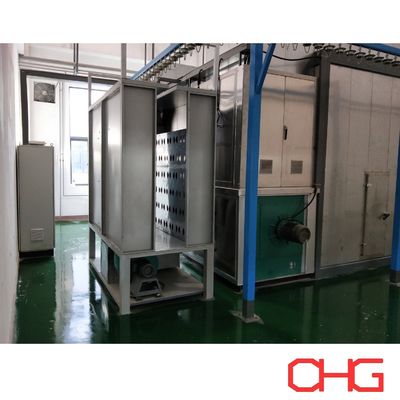
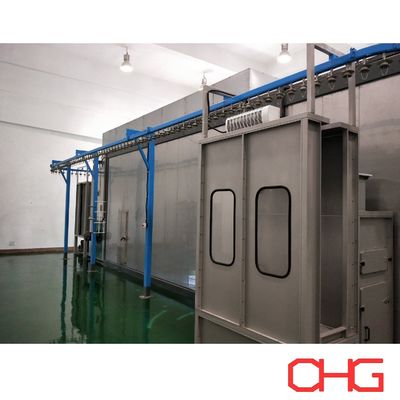
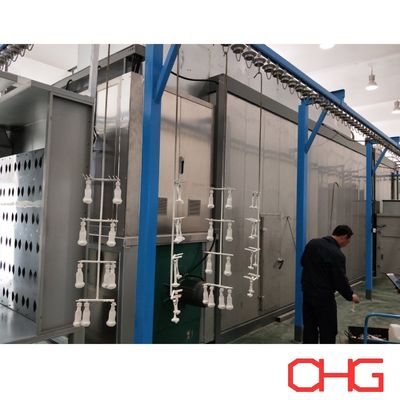
Glass Lubricant Coating Line for Titanium Alloy Forgings
Customized Surface Coating System for High-Temperature Forging Applications
This glass lubricant coating production line is designed for the surface treatment of titanium alloy forgings before heating and forming.
During high-temperature forging, titanium alloys require suitable surface protection and lubrication. A glass-based protective lubricant is applied to the workpiece surface before forging to form a functional coating layer for the subsequent heating and forming processes.
The coating mainly performs two important functions:
Surface protection: Helps protect the titanium alloy surface from oxidation during high-temperature heating and forging.
Forging lubrication: Reduces friction between the heated workpiece and forging dies, supporting smoother material flow during forming.
The coating equipment and production process can be customized according to the dimensions, weight, geometry, production capacity, and specific coating requirements of the titanium alloy components.
Role of Glass Lubricant in Titanium Forging
Titanium alloys are processed at elevated temperatures during forging. Under these conditions, surface oxidation and friction between the workpiece and tooling can affect both processing and final product quality.
Applying a suitable glass lubricant before forging creates a protective and lubricating layer on the titanium surface.
During the subsequent high-temperature process, this coating helps:
Reduce direct exposure of the titanium surface to the atmosphere
Limit high-temperature surface oxidation
Reduce friction between the forging and die
Improve lubrication during deformation
Support material flow during forming
Protect the workpiece surface during the forging process
The coating material and application parameters should be selected according to the titanium alloy, forging temperature, forming process, and lubricant manufacturer's requirements.
Coating Application System
The application section can be configured according to the workpiece geometry and required production capacity.
Depending on the project, the system can combine:
Automatic spraying equipment
Reciprocating spray mechanisms
Manual spray guns
Manual touch-up stations
Coating supply equipment
Workpiece positioning equipment
Ventilation and extraction systems
Automatic spraying can be used for the main workpiece surfaces, while manual touch-up provides additional flexibility for complicated geometries or areas that are difficult to reach automatically.
This combination is particularly suitable when a production line needs to process forgings of different shapes and dimensions.
Material Handling System
Titanium alloy forgings can vary considerably in size and weight. The material handling system therefore needs to be engineered according to the actual products.
Depending on the project requirements, the production line can incorporate suitable conveyor and workpiece transfer equipment to connect the coating stages.
Key design considerations include:
Maximum workpiece dimensions
Maximum workpiece weight
Workpiece orientation
Required production capacity
Spraying position
Loading and unloading method
Required process time
Factory layout
For large or heavy forgings, a heavy-duty conveyor and customized carriers can be incorporated into the production line.
Typical Process Flow
The exact production sequence depends on the selected glass lubricant and forging process. A typical coating line can be arranged around the following operations:
Workpiece Loading → Surface Preparation → Glass Lubricant Application → Coating Treatment / Drying as Required → Inspection → Unloading → Transfer to Subsequent Heating and Forging
1. Workpiece Loading
Titanium alloy components are loaded onto the designated carrier or handling equipment.
Fixtures and workpiece positioning are designed according to product geometry, weight, and required coating areas.
2. Surface Preparation
Before application, the workpiece surface should meet the cleanliness and preparation requirements of the selected glass lubricant system.
The specific preparation method is determined according to the manufacturing process and coating specification.
3. Glass Lubricant Application
The protective lubricant is applied uniformly to the required surfaces.
Application parameters are controlled according to factors such as:
Coating material
Workpiece geometry
Required coating thickness
Spray characteristics
Product temperature where applicable
Subsequent forging requirements
Automatic spraying and manual touch-up can be combined where necessary to achieve the required coverage.
4. Coating Treatment and Drying
Where required by the selected lubricant system, the coated components undergo an appropriate drying or conditioning process before further handling.
Process conditions are determined according to the coating manufacturer's technical requirements and the actual forging process.
5. Inspection and Unloading
After coating, workpieces can be inspected for surface coverage and coating condition before unloading and transfer to the subsequent heating and forging operations.
Advantages of a Dedicated Coating Line
Consistent Lubricant Application
Controlled coating equipment helps provide repeatable coverage compared with less standardized manual application methods.
Suitable for Industrial Production
Conveyorized material handling and automatic spraying can support repetitive production of titanium alloy forgings.
Automatic and Manual Spraying Combination
Automatic equipment can handle the main coating operation, while manual spraying provides flexibility for complicated surfaces and different workpiece types.
Adaptable to Large and Heavy Forgings
The material handling system, carriers, and coating stations can be engineered according to the weight and dimensions of the actual products.
Process-Specific Engineering
The complete system is designed around the customer's forging process rather than applying a standard powder or liquid painting line configuration.
Customized Glass Lubricant Coating Solutions
Each production line is developed according to the customer's actual forging and coating requirements.
Important information for engineering includes:
Titanium alloy grade
Workpiece drawings
Maximum dimensions
Maximum weight
Product geometry
Required production capacity
Glass lubricant specification
Required coating thickness or application requirement
Surface preparation requirements
Drying or conditioning requirements
Loading and unloading method
Factory dimensions
Required automation level
Based on these parameters, we can develop a customized solution covering the material handling system, workpiece carriers, coating application equipment, automatic and manual spraying arrangement, ventilation system, process control, and overall production line layout.
Contact us with your titanium forging and coating process information for a customized glass lubricant coating line proposal and quotation.