logo

products details

Created with Pixso. Home Created with Pixso. Products Created with Pixso.
Conveyor System
Created with Pixso.

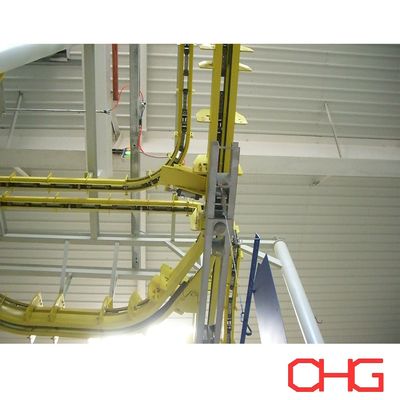
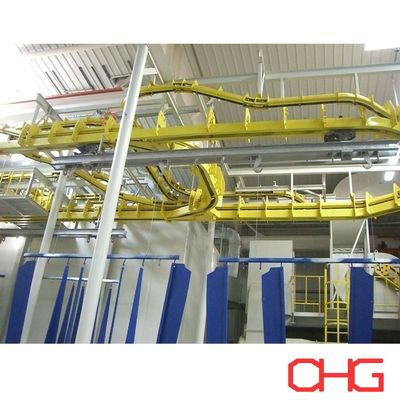
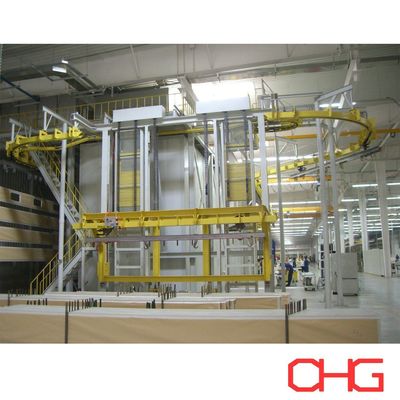
Overhead Power and Free Conveyor System with Integrated Lifting and Transfer Equipment for Complex Coating Line Layouts

Overhead Power and Free Conveyor System with Integrated Lifting and Transfer Equipment for Complex Coating Line Layouts

Brand Name: CHG
Model Number: CS-05
MOQ: 1 set
Price: 5,000-100,000 USD
Payment Terms: D/A,L/C,D/P,T/T
Supply Ability: 50 sets per year
Detail Information
Place of Origin:
China
Certification:
CE, ISO
Model NO.:
CS-05
Material:
Carbon Steel
Material Feature:
Heat Resistant
Trademark:
CHG
Origin:
China
Supply Ability:
50/Year
After-sales Service:
Guide Equipment Installation And Use
Packaging Details:
Varies depending on the design
Product Description

Power and Free Conveyor System with Lifting Equipment for Coating Lines


Customized Overhead Material Handling for Automated Coating Production

This Power and Free conveyor system with lifting equipment is designed for industrial coating production lines requiring flexible workpiece transportation, vertical transfer, accumulation, and controlled movement between different process sections.

By combining a Power and Free overhead conveyor with lifting and transfer equipment, workpieces can be transported not only horizontally through the production line but also vertically where required by the process or factory layout.

This configuration is particularly useful for coating lines involving loading and unloading stations, multi-level conveyor layouts, process transfer points, immersion treatment, or areas with different conveyor elevations.

The complete system is customized according to workpiece dimensions, weight, production capacity, process flow, factory clear height, and coating equipment arrangement.


Power and Free Conveyor Configuration

The conveyor uses separate power and free tracks.

The power track contains the driven chain that provides transportation force, while individual carriers travel on the free track. Through mechanical engagement and release mechanisms, carriers can move independently within the conveyor system.

This arrangement allows carriers to:

  • Move through continuous process sections

  • Stop at designated stations

  • Accumulate in buffer areas

  • Be released individually

  • Transfer between conveyor sections

  • Change routes where required

  • Coordinate with lifting equipment

Compared with a conventional continuous overhead conveyor, this provides greater flexibility for coating processes with different cycle times.


Integrated Lifting Equipment

The lifting system provides controlled vertical movement of carriers or workpieces at designated positions.

Depending on the production process, lifting equipment can be incorporated for:

  • Raising workpieces from loading level to overhead conveyor level

  • Lowering carriers for convenient loading or unloading

  • Connecting conveyor sections at different elevations

  • Transferring products between process areas

  • Supporting immersion or dipping processes where applicable

  • Adapting the conveyor route to factory height restrictions

The lifting stroke, load capacity, transfer method, and operating sequence are engineered according to the actual project.


Convenient Loading and Unloading

For large, heavy, or difficult-to-handle workpieces, loading directly onto a high overhead conveyor can be inconvenient.

A lifting station can lower the carrier to a more suitable working height for loading or unloading. After the product is secured, the carrier is raised and transferred back into the main conveyor system.

This arrangement can:

  • Simplify workpiece handling

  • Reduce unnecessary lifting by operators

  • Improve access to carriers and hangers

  • Support handling of larger products

  • Connect ground-level operations with overhead transportation

Loading and unloading can be manual, forklift-assisted, or coordinated with other material handling equipment depending on product characteristics.


Customized Carrier and Hanger Design

Carriers are engineered according to the actual workpieces being transported.

Design considerations include:

  • Maximum workpiece dimensions

  • Maximum weight

  • Number of products per carrier

  • Center of gravity

  • Hanging orientation

  • Required coating accessibility

  • Carrier spacing

  • Conveyor clearance

  • Oven opening dimensions

  • Loading and unloading method

  • Lifting requirements

Suitable fixtures and hangers help maintain workpiece stability during transportation, lifting, spraying, curing, and other coating processes.


Carrier Accumulation and Buffering

Power and Free technology allows carriers to accumulate at designated positions without stopping the entire conveyor.

Accumulation zones can be incorporated:

  • Before spray booths

  • Before curing ovens

  • Between processes with different cycle times

  • At loading stations

  • At unloading stations

  • Before lifting or transfer equipment

  • At inspection areas

This provides production buffers and helps coordinate coating equipment that operates at different processing speeds.


Flexible Conveyor Routing

The conveyor route can be customized according to the coating process and available workshop space.

Where required, switches and transfer sections can allow carriers to follow different paths within the production line.

Possible configurations include:

  • Main and branch conveyor routes

  • Process bypass sections

  • Multiple coating stations

  • Separate accumulation areas

  • Alternative loading and unloading points

  • Conveyor sections at different elevations

Flexible routing can be particularly useful when several product types are processed on the same coating line.


Integration with Coating Production Equipment

The Power and Free conveyor and lifting system can be integrated with various coating processes and equipment, including:

  • Spray pretreatment systems

  • Immersion pretreatment systems

  • Moisture drying sections

  • Powder spray booths

  • Automatic powder spraying equipment

  • Manual touch-up stations

  • Liquid painting equipment

  • Curing ovens

  • Cooling zones

  • Inspection stations

  • Loading and unloading areas

The conveyor layout and carrier movement sequence are coordinated with the complete process flow during engineering.


PLC-Based Control and Synchronization

The conveyor and lifting equipment can be integrated into the production line's PLC and HMI control system.

Depending on the project configuration, the control system can coordinate:

  • Conveyor movement

  • Carrier detection

  • Stop and release positions

  • Accumulation sequences

  • Lifting and lowering operations

  • Transfer mechanisms

  • Conveyor speed

  • Process routing

  • Equipment interlocking

  • Fault alarms

  • Operating status

Sensors and position detection devices can be installed at key locations to coordinate carrier movement with lifting and coating equipment.


Safety and Equipment Protection

Appropriate safety measures are incorporated according to the equipment layout, carrier load, lifting operation, and production environment.

Depending on the application, the system can include:

  • Emergency stop devices

  • Carrier position detection

  • Lifting position detection

  • Overload protection

  • Mechanical interlocks

  • Conveyor interlocks

  • Anti-collision control where required

  • Mechanical guarding

  • Fault alarms

  • Operator protection around lifting and transfer areas

The detailed safety configuration is determined during project engineering.


Main Advantages

  • Horizontal and Vertical Material Transfer: Combining overhead transportation with lifting equipment allows carriers to move between different heights and process areas within one coordinated material handling system.
  • Flexible Production Flow: Individual carrier control allows workpieces to stop, accumulate, transfer, and continue according to actual process requirements.
  • Improved Workshop Space Utilization: Overhead transportation reduces floor-space occupation, while vertical transfer makes it possible to develop conveyor layouts around existing factory conditions.
  • Easier Workpiece Handling: Lowering carriers at loading or unloading positions can simplify the handling of large or heavy products.
  • Production Buffering: Accumulation areas help balance processes with different cycle times and reduce the impact of temporary interruptions.
  • Customized for Different Workpieces: Carrier capacity, hanger design, lifting equipment, track layout, and control logic are engineered according to the actual products rather than based on a fixed standard configuration.


Typical Applications

Power and Free conveyor systems with lifting equipment can be used in coating lines for:

  • Automotive components

  • Machinery parts

  • Electrical cabinets and enclosures

  • HVAC products

  • Agricultural equipment

  • Metal furniture

  • Storage systems

  • Fabricated steel products

  • Large industrial components

  • General metal products

The appropriate configuration depends on workpiece weight, dimensions, coating process, and required production capacity.


Technical Configuration

Item

Configuration

Conveyor Type

Power and Free overhead conveyor

Track Arrangement

Separate power and free tracks

Carrier Design

Customized according to workpiece

Lifting Equipment

Customized according to load and transfer requirements

Conveyor Routing

Project-specific layout

Accumulation

Available at designated process positions

Control System

PLC-based conveyor and lifting control

Loading / Unloading

Manual, forklift-assisted, or customized

Safety Protection

Designed according to equipment configuration and operating requirements


Customized Conveyor and Lifting Solutions

Each Power and Free conveyor system is designed according to the customer's production process and factory conditions.

Important engineering information includes:

  • Workpiece dimensions

  • Maximum workpiece weight

  • Products per carrier

  • Required production capacity

  • Process flow

  • Carrier spacing

  • Conveyor speed requirements

  • Factory dimensions and clear height

  • Required lifting height

  • Loading and unloading method

  • Accumulation positions

  • Conveyor routing

  • Coating equipment layout

  • Required automation level

Based on these parameters, we can develop a customized solution covering the Power and Free track system, carriers, hangers, lifting equipment, accumulation sections, transfer mechanisms, drive system, PLC control, safety protection, and integration with the complete coating production line.

Contact us with your workpiece information, coating process, and factory layout for a customized Power and Free conveyor and lifting system proposal.


Professional Power&Free Conveyor System with Lifting Machine for Coating Production Line Professional Power&Free Conveyor System with Lifting Machine for Coating Production Line Professional Power&Free Conveyor System with Lifting Machine for Coating Production Line