|
|
| Brand Name: | CHG |
| Model Number: | PR-DP-02 |
| MOQ: | 1 set |
| Price: | 100,000-150,000 USD |
| Payment Terms: | L/C,D/A,D/P,T/T |
| Supply Ability: | 10 sets per year |
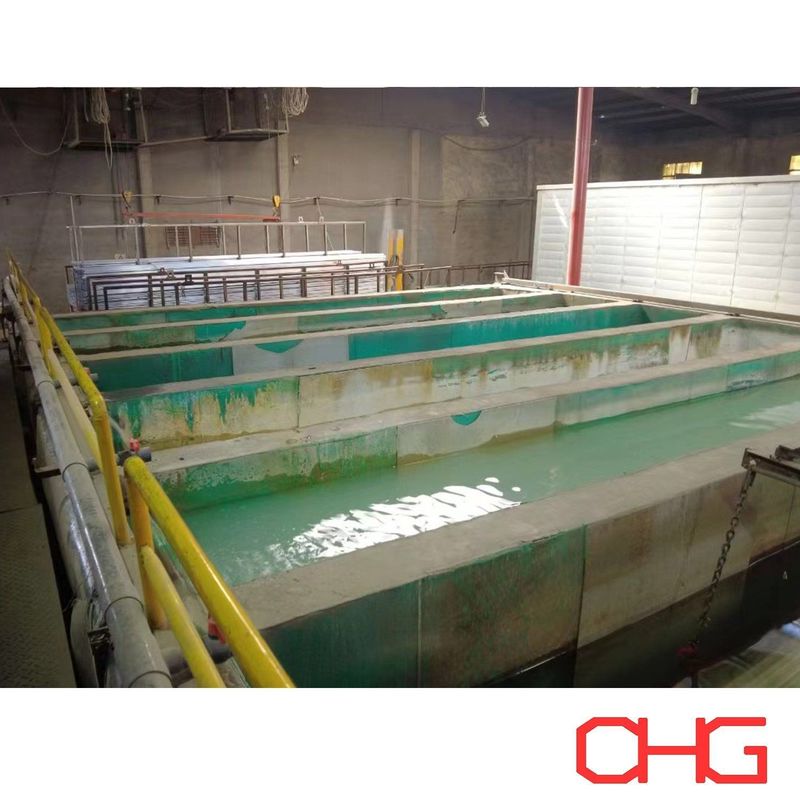
Immersion Pretreatment System for Aluminum Profiles
Customized Surface Treatment Equipment for Aluminum Coating Lines
This immersion pretreatment system is designed for the surface preparation of aluminum profiles before powder coating, electrophoretic coating, liquid painting, and other finishing processes.
Unlike spray pretreatment, the dipping process completely immerses aluminum profiles in a series of treatment baths. This allows chemical solutions to reach the entire exposed surface of the workpiece, including grooves, recessed sections, internal surfaces, and complex cross-sectional structures.
The system can integrate cleaning, etching, rinsing, surface conditioning, and conversion treatment into a complete pretreatment process, providing a clean and properly prepared aluminum substrate for subsequent coating.
Why Use Immersion Pretreatment for Aluminum Profiles?
Aluminum extrusions frequently feature complicated cross-sections that can make uniform surface treatment challenging. Complete immersion provides consistent contact between the chemical solution and the workpiece during each treatment stage.
This approach is particularly suitable for:
Long aluminum profiles
Profiles with deep grooves
Hollow or semi-enclosed sections
Complex extruded geometries
Products requiring consistent surface treatment
The result is more uniform surface preparation across different areas of the profile.
Multi-Stage Aluminum Pretreatment Process
The exact pretreatment sequence depends on the aluminum alloy, initial surface condition, required coating system, and corrosion-resistance specification.
A typical immersion process may include:
Degreasing → Rinsing → Etching → Rinsing → Surface Conditioning → Conversion Treatment → Final Rinsing
Additional stages can be incorporated where required by the project.
1. Cleaning and Degreasing
The aluminum profiles are immersed in a suitable cleaning solution to remove contaminants accumulated during extrusion, machining, storage, and transportation.
Typical contaminants include:
Processing oils
Grease
Dust
Dirt
Handling residues
Other surface contamination
Effective cleaning provides a suitable foundation for subsequent chemical treatment.
2. Rinsing
After cleaning, the profiles are transferred through one or more water-rinse tanks.
Rinsing removes residual cleaning chemicals from the workpiece and helps reduce chemical carryover between adjacent treatment baths.
Multiple rinse stages can be incorporated depending on the required process quality and chemical system.
3. Etching and Surface Conditioning
Depending on the required finish, the aluminum surface may undergo chemical etching or other conditioning processes.
This stage helps remove surface oxides and creates a more uniform substrate condition for subsequent conversion treatment.
Process chemistry and treatment parameters are selected according to the aluminum alloy and required coating specification.
4. Conversion Treatment
A suitable conversion treatment is applied to prepare the aluminum surface for subsequent coating.
Depending on project requirements, the system can be configured for:
Chromate conversion treatment
Chrome-free conversion treatment
Other specified aluminum surface treatment processes
The conversion layer helps improve coating adhesion and contributes to the corrosion protection of the complete coating system.
5. Final Rinsing
Following conversion treatment, the profiles undergo final rinsing to remove unwanted chemical residues.
Where required, deionized water rinsing can be incorporated as part of the final treatment sequence to provide a clean surface before drying and coating.
Complete Immersion for Complex Profile Geometries
One of the main advantages of dipping pretreatment is the ability to treat complicated aluminum shapes without relying solely on spray direction or nozzle coverage.
Complete immersion helps provide treatment solution contact with:
External profile surfaces
Grooves and channels
Recessed areas
Corners
Complex cross-sections
Accessible internal surfaces
This makes immersion treatment particularly useful for aluminum extrusion applications where workpiece geometry varies significantly between products.
Material Handling and Production Configuration
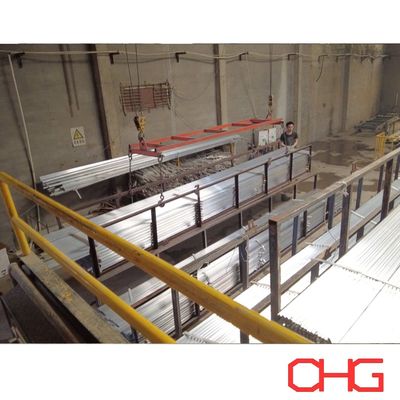
The pretreatment system can be engineered for batch or automated material handling according to production requirements.
Multiple profiles can be processed together using suitable carriers, baskets, racks, or lifting arrangements. The material handling system transfers the workpieces between treatment tanks according to the required process sequence and immersion time.
The system can be configured according to:
Maximum profile length
Workpiece weight
Batch quantity
Required production capacity
Treatment time
Tank dimensions
Available factory height and floor space
Required automation level
Process Control and Monitoring
Stable chemical treatment conditions are important for maintaining consistent pretreatment quality.
Depending on the system configuration, automatic control and monitoring functions can be provided for parameters such as:
Bath temperature
Treatment time
Liquid level
Circulation equipment
Workpiece transfer sequence
Equipment operating status
Process alarms
PLC and HMI control can be incorporated according to the required level of automation.
Main Advantages
Typical Applications
The immersion pretreatment system is suitable for aluminum products such as:
Architectural aluminum profiles
Window and door profiles
Curtain wall components
Industrial aluminum extrusions
Automotive aluminum components
Aluminum furniture components
Electrical and electronic enclosures
Decorative aluminum products
Other fabricated aluminum components
Customized Aluminum Pretreatment Systems
Every aluminum pretreatment project requires a process configuration based on the actual product and finishing requirements.
Important engineering information includes:
Aluminum alloy and substrate condition
Maximum profile dimensions
Workpiece and batch weight
Required production capacity
Final coating process
Corrosion-resistance requirements
Pretreatment chemical specification
Available factory dimensions
Environmental and wastewater requirements
Required automation level
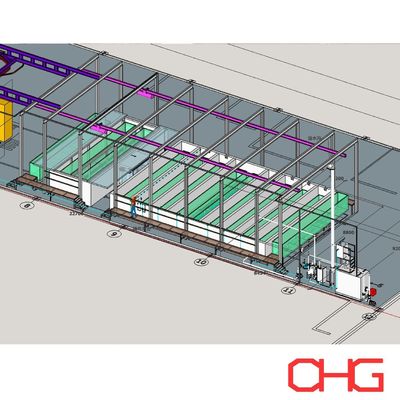
Based on these parameters, we can develop the appropriate tank arrangement, treatment sequence, material handling system, process control configuration, and equipment layout.
Contact us with your aluminum profile specifications and production requirements for a customized immersion pretreatment solution.
![]()