logo

products details

Created with Pixso. Home Created with Pixso. Products Created with Pixso.
Pretreatment Line
Created with Pixso.

Automatic Dipping and Spray Pretreatment Line for Electrophoresis/Electrophoretic Coating Advanced Powder Coating Method

Automatic Dipping and Spray Pretreatment Line for Electrophoresis/Electrophoretic Coating Advanced Powder Coating Method

Brand Name: CHG
Model Number: AC-31
MOQ: 1 set
Price: 100,000-200,000 USD
Payment Terms: L/C,D/A,D/P,T/T
Supply Ability: 10 sets per year
Detail Information
Place of Origin:
China
Certification:
CE, ISO
Coating:
Plating, Powder
Application:
Hardware Spraying Equipment
Method Type:
Automatic
After-Sales Service:
Guide Equipment Installation And Use
Control Unit:
PLC
Transport Package:
Customized
Specification:
Customized
Shipping Cost:
Contact The Supplier About Freight And Estimated Delivery Time.
Packaging Details:
Varies depending on the design
Highlight:

Automatic dipping pretreatment line for electrophoresis

,

Spray pretreatment system for electrophoretic coating

,

Powder coating pretreatment line with dipping

Product Description

Automotive Metal Pretreatment System for Electrophoretic Coating Lines


Integrated Surface Preparation Solution for E-Coating / KTL Applications

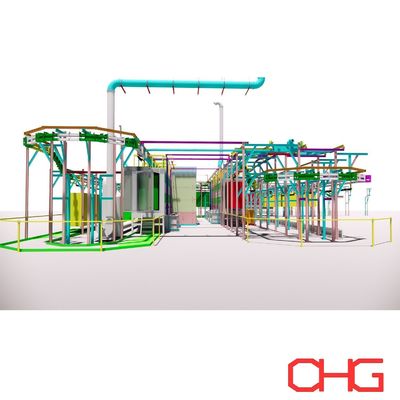
This metal pretreatment system is engineered for automotive components requiring electrophoretic coating (E-coating / KTL). The system prepares the workpiece surface before electrophoretic deposition by removing oil, oxides, scale, and other contaminants that may affect coating performance.

A properly designed pretreatment process provides a clean and activated metal surface, helping improve E-coat adhesion, corrosion protection, and coating consistency during subsequent production.

The equipment incorporates automatic process control and monitoring functions for important operating parameters such as bath temperature, liquid level, treatment time, and chemical conditions. Process configuration can be adapted according to the substrate material, workpiece characteristics, required coating performance, and production capacity.


Pretreatment Process Configuration

The pretreatment line incorporates multiple cleaning, rinsing, and surface activation stages before workpieces enter the electrophoretic coating section.

A typical process configuration for this system includes:

Pre-Degreasing → Degreasing → Rinse 1 → Rinse 2 → Acid Treatment → Rinse 3 → Rinse 4 → E-Coating

1. Pre-Degreasing

The first cleaning stage removes loose contamination and a portion of the oil present on the workpiece.

Pre-degreasing reduces the contamination load entering the main degreasing section and helps maintain stable downstream cleaning performance.

2. Degreasing

The workpieces then undergo more intensive chemical cleaning to remove:

  • Oil

  • Grease

  • Processing residues

  • Organic contamination

  • Remaining surface dirt

Effective degreasing is essential because residual contamination can interfere with subsequent chemical treatment and electrophoretic coating adhesion.

3. First Rinsing Stage

After degreasing, workpieces are rinsed to remove residual cleaning chemicals and contaminants carried over from the previous process.

This stage helps reduce chemical transfer between treatment sections.

4. Second Rinsing Stage

A further rinsing process improves surface cleanliness and prepares the workpieces for acid treatment.

Multiple rinse stages help maintain more stable chemical conditions throughout the pretreatment system.

5. Acid Surface Treatment

The acid treatment section removes surface oxides, scale, and other inorganic residues remaining on the metal substrate.

This process can help eliminate:

  • Oxide films

  • Scale residues

  • Surface impurities

  • Remaining inorganic contamination

The treatment creates a more suitable surface condition for subsequent processing and electrophoretic coating.

6. Post-Acid Rinse 1

After acid treatment, the workpieces undergo rinsing to remove residual acid and dissolved contaminants from the surface.

This prevents excessive chemical carryover into downstream sections.

7. Post-Acid Rinse 2

The final rinsing stage further cleans the workpiece before it enters the next coating process.

Maintaining a clean surface at this stage is important for achieving stable electrophoretic deposition and consistent coating quality.


Spray and Immersion Process Combination

Different treatment methods can be incorporated within the same pretreatment line according to process requirements.

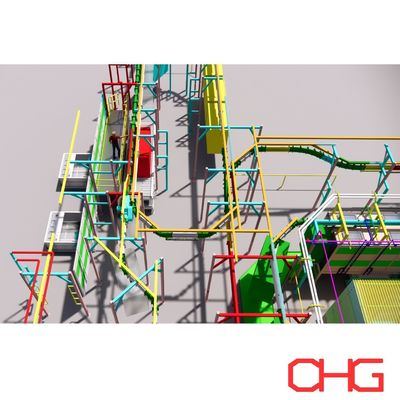
Spray sections use strategically arranged rinse rings, pipes, and nozzles to provide effective surface coverage, while immersion treatment can be used where longer contact time or complete workpiece coverage is required.

For this system, the acid treatment section adopts a bath treatment configuration with a 10-meter effective treatment zone, while the surrounding cleaning and rinsing stages use spray treatment.

This combined arrangement provides flexibility in balancing:

  • Surface treatment effectiveness

  • Processing time

  • Chemical consumption

  • Equipment dimensions

  • Production capacity

Technical Configuration

Item

Pre-Degreasing

Degreasing

Rinse 1

Rinse 2

Acid Treatment

Rinse 3

Rinse 4

Rinse Rings

6

6

4

4

Bath

4

4

Rinse Tubes

12

12

8

8

8

8

Total Nozzles

144

144

96

96

96

96

Effective Treatment Zone

3.0 m

2.0 m

2.0 m

1.0 m

10.0 m

1.3 m

Customized

Spray Pump Material

Cast Iron

Cast Iron

Cast Iron

Stainless Steel

Stainless Steel

Cast Iron

Stainless Steel

Bath Level Control

Automatic

Automatic

Cascade

Automatic

Automatic

Cascade

Automatic

The above configuration represents a project-specific solution. Equipment specifications can be modified according to the required process, workpiece characteristics, and production conditions.


Workpiece Capacity

The pretreatment system is designed to accommodate automotive metal components with maximum dimensions of approximately:

1.1 m × 4.0 m × 2.0 m

Actual equipment dimensions, treatment zones, conveyor configuration, and process parameters can be engineered according to:

  • Maximum workpiece dimensions

  • Individual and carrier loading weight

  • Production capacity

  • Workpiece material

  • Surface condition

  • Required treatment chemicals

  • Conveyor speed

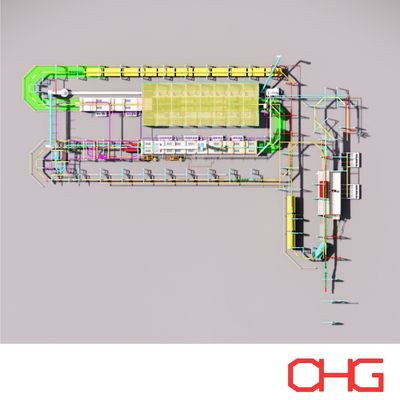
  • Factory space and layout

  • E-coating process requirements

Automatic Process Monitoring and Control

Stable pretreatment conditions are essential for maintaining repeatable E-coating quality.

Depending on the project requirements, the control system can monitor and manage key operating parameters including:

  • Bath temperature

  • Liquid level

  • Treatment time

  • Pump operation

  • Process sequence

  • Equipment operating status

  • Alarm conditions

Automatic liquid-level control and cascade rinsing arrangements can also be incorporated according to the requirements of individual process stages.


Advantages of the Pretreatment System

  • Consistent Surface Cleaning: Multiple cleaning and rinsing stages remove contaminants systematically before electrophoretic coating, providing a more stable substrate condition.
  • Improved E-Coat Adhesion: Effective degreasing and surface treatment help prepare the metal substrate for reliable electrophoretic deposition and strong coating adhesion.
  • Enhanced Corrosion Protection: Correct pretreatment contributes directly to the corrosion resistance and long-term performance of the complete E-coating system.
  • Controlled Chemical Carryover: Multiple rinsing stages reduce the transfer of chemicals and contaminants between adjacent treatment processes, helping maintain more stable bath conditions.
  • Flexible Process Engineering: The process sequence, treatment method, equipment dimensions, pumps, tanks, nozzles, and control functions can be adapted to different production requirements.
  • Integration with Complete E-Coating Lines: The pretreatment equipment can be engineered as part of a complete electrophoretic coating production line, allowing coordinated design of material handling, pretreatment, E-coating, rinsing, curing, and control systems.

Typical Applications

This type of E-coating pretreatment system can be applied to various metal products, including:

  • Automotive battery housings

  • Automotive structural components

  • Chassis components

  • Metal frames and brackets

  • Fabricated steel components

  • Industrial machinery parts

  • Other products requiring electrophoretic coating

Customized E-Coating Pretreatment Solutions

Every pretreatment line should be configured according to the actual product, substrate, production capacity, and required coating performance.

Our engineering scope can include:

  • Pretreatment process design

  • Spray and immersion treatment equipment

  • Process tanks and circulation systems

  • Pumps, piping, and nozzle arrangements

  • Conveyor and material handling integration

  • Automatic process control

  • Equipment layout optimization

  • Integration with complete KTL / EPD coating systems

Contact us with your workpiece drawings, production capacity, substrate information, coating specifications, and available factory layout for a customized E-coating pretreatment system proposal.

Clarify this is a representative configurationResolve the process-stage numbering


Professional Pretreatment Line for Electrophoresis/Electrophoretic (KTL/EPD) Coating

Professional Pretreatment Line for Electrophoresis/Electrophoretic (KTL/EPD) Coating