|
|
| Brand Name: | CHG |
| Model Number: | AC-01 |
| MOQ: | 1 set |
| Price: | 1,000,000 - 2,000,000 USD |
| Payment Terms: | L/C,D/A,D/P,T/T |
| Supply Ability: | 10 sets per year |
Advanced E-Coating Solution for Battery Housing Protection
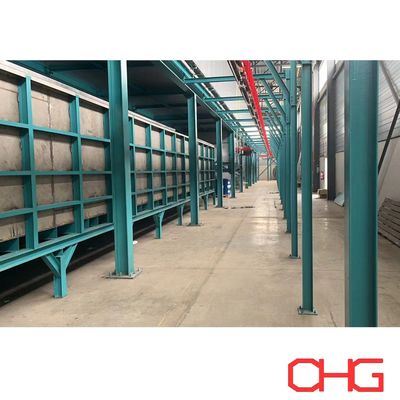
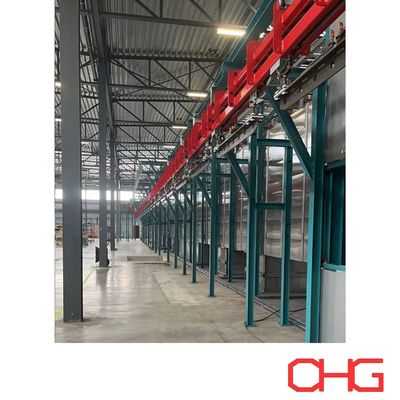
This customized electrophoretic coating production line is specifically engineered for automotive battery enclosures, battery trays, and other metal housing components requiring excellent corrosion protection and long-term durability.
Using advanced cathodic electrophoretic deposition (CED/KTL/EPD) technology, the system applies a uniform protective coating layer to the entire surface of immersed components. Even complex structures, internal cavities, and recessed areas can achieve consistent coating coverage, improving product reliability and service life under demanding automotive conditions.
Project Execution Process
1. Engineering Design Phase
During the initial design stage, our engineering team works closely with customers to develop an optimized coating solution.
Main activities include:
Detailed technical communication and process analysis
Evaluation of product dimensions and production requirements
Customized equipment design according to factory layout conditions
Development and optimization of engineering drawings
Final confirmation of complete production line configuration
The system design is tailored to achieve efficient production flow, convenient operation, and reliable long-term performance.
2. Equipment Manufacturing Phase
After design approval, the production line is manufactured according to confirmed technical documents.
Manufacturing procedures include:
Equipment fabrication based on approved drawings
Component quality inspection
Assembly verification
Manufacturing progress tracking
Final equipment inspection before shipment
Strict quality control ensures equipment reliability and stable operation after installation.
3. Installation & Commissioning Phase
Professional technical support is provided during project implementation.
Services include:
Overseas installation assistance
Equipment commissioning
Process parameter adjustment
Trial production support
Operator training
Training covers:
Equipment operation procedures
Daily maintenance requirements
Process parameter management
Troubleshooting methods
Production safety requirements
This ensures smooth production startup and stable operation after project completion.
Technical Overview of Electrophoretic Coating (E-Coating)
Electrophoretic coating is also known as:
Electrophoretic Deposition (EPD)
Electrocoating
Cathodic Electrodeposition (CED)
KTL Coating
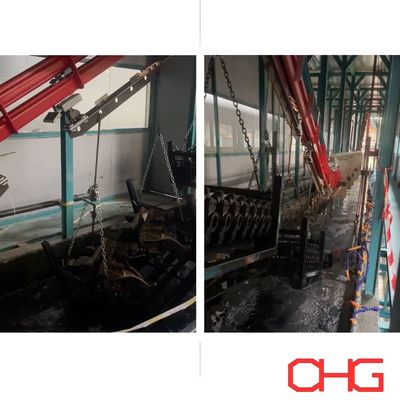
The process uses a water-based coating system combined with electrical current to deposit paint particles onto conductive metal components.
During the process:
Metal parts are immersed in the electrophoretic paint bath.
Electrical voltage causes charged paint particles to migrate toward the workpiece.
A uniform coating film forms on the metal surface.
The coated parts are cured in an oven to achieve final coating performance.
Main Advantages of Electrophoretic Coating Technology
Uniform Coating Coverage
Electrophoretic deposition provides excellent coating uniformity across different component geometries.
Advantages include:
Consistent film thickness
Complete coverage of complex structures
Effective coating of cavities and recessed areas
Improved appearance and product reliability
Excellent Corrosion Protection
The dense electrophoretic coating layer provides strong protection against harsh environments.
Benefits include:
High corrosion resistance
Strong adhesion to metal substrates
Improved resistance to moisture and chemicals
Extended component service life
This makes E-coating especially suitable for automotive battery protection applications.
High Production Efficiency
The automated immersion coating process enables continuous industrial production.
Advantages:
Reduced manual operation requirements
Stable production capacity
Improved process consistency
Suitable for high-volume manufacturing
Environmentally Friendly Process
Electrophoretic coating uses water-based paint technology, helping reduce environmental impact.
Features include:
Low VOC emissions
Reduced solvent usage
Lower hazardous air pollutant emissions
Improved workplace safety
High Material Utilization Efficiency
Compared with conventional spray coating methods, electrophoretic coating offers:
High paint transfer efficiency
Minimal coating waste
Reduced material consumption
Lower operating costs
Excellent Adhesion on Multiple Substrates
The technology provides strong bonding performance on various conductive materials, including:
Carbon steel
Aluminum alloys
Galvanized steel
Zinc-coated materials
Other engineered metal substrates
Enhanced Workplace Safety
The water-based coating system reduces dependence on flammable solvents.
Benefits include:
Safer production environment
Reduced chemical hazards
Improved operator protection
Stable Quality Control
Advanced control systems continuously monitor key process parameters, including:
Coating thickness
Voltage and current
Bath temperature
Paint concentration
Surface appearance
This ensures consistent coating quality throughout production.
Flexible Electrophoretic Coating Applications
The system can be configured for different finishing requirements, including:
Black electrophoretic coatings
Clear protective coatings
Colored E-coat finishes
Functional specialty coatings
Decorative surface treatments
Customized KTL / EPD Coating Solutions
Each electrophoretic coating production line is designed according to customer requirements, including:
Battery enclosure dimensions
Production capacity
Coating performance standards
Factory layout conditions
Automation level
Environmental requirements
We provide complete customized solutions covering engineering design, equipment manufacturing, installation support, commissioning, and technical service.
Contact us today to receive a customized E-coating proposal for your automotive battery enclosure production project.
![]()
![]()
![]()